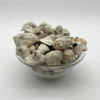
Enigma Mushroom
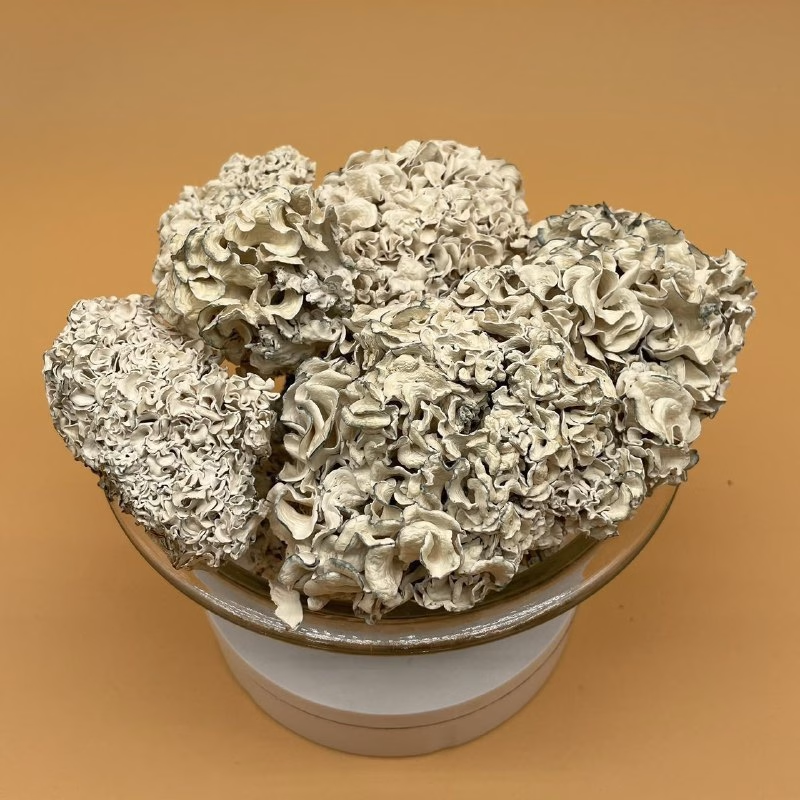
The Enigma Mushroom is a highly sought-after Psilocybe cubensis mutation known for its striking, brain-like formations and dense, non-sporulating growth. Revered in the mycology community, this unique phenotype develops as a twisting, coral-style mass rather than forming traditional caps and stems. Because it does not naturally release spores, Enigma is typically preserved and shared through culture transfers, making it a distinctive specimen for advanced cultivators and scientific research.
Mycology enthusiasts value the Enigma Mushroom for its slow but exceptionally compact growth, unusual textures, and rare genetic traits. Its extraordinary appearance makes it a fascinating subject for microscopy studies, strain comparison, and morphological analysis. The mushroom’s unusual developmental patterns also offer researchers an opportunity to explore mutation stability, environmental adaptation, and phenotype expression within P. cubensis varieties.
Often considered one of the most visually captivating cube mutations, Enigma stands out among collectors and educators alike for its reliability in culture, distinctive aesthetic, and notable resilience in controlled environments. Whether used for academic study, mycological preservation, or comparative research, the Enigma Mushroom continues to hold a unique place in the world of modern mycology.
(For educational and mycological research purposes only. No claims regarding cultivation legality or consumption.)
If you’d like, I can also generate:
✨ Product tags
✨ Meta title + meta description
✨ E-commerce description (Shopify/Etsy)
✨ Social media captions
Just let me know!
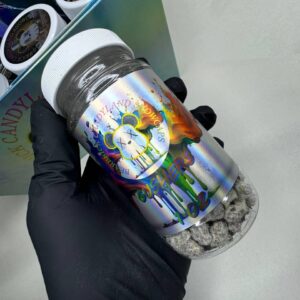
✅ Properties of the Enigma Mushroom (Mycological Overview)
1. Morphological Properties
-
Mutation of Psilocybe cubensis producing coral-like, brain-like formations.
-
Non-sporulating phenotype, meaning it does not release spores naturally.
-
Dense, compact biomass instead of separate caps and stems.
-
Unique whorled, folded structures that make it visually distinct among cube mutations.
2. Genetic Characteristics
-
Considered a stable mutation, maintaining its unusual growth pattern across generations of culture transfers.
-
Propagated exclusively through tissue culture, due to lack of spore production.
-
Used by researchers to study:
-
Mutation inheritance
-
Mycelial evolution
-
Phenotypic expression under varying environments
-
3. Growth Behavior (Research Context Only)
-
Exhibits slower growth than many other P. cubensis strains.
-
Produces extremely dense mycelial networks ideal for morphological study.
-
Highly resilient in controlled, sterile laboratory environments.
✅ Uses of the Enigma Mushroom (Legal Research Purposes Only)
1. Microscopy & Mycological Study
-
Commonly used for taxonomic comparison with other P. cubensis strains.
-
Allows researchers to observe:
-
Hyphal structures
-
Mutation stability
-
Mycelial differentiation
-
2. Culture Preservation & Genetic Libraries
-
Maintained in mycological culture banks as an example of a stable non-sporulating mutation.
-
Valuable for research into:
-
Fungal reproduction anomalies
-
Heritable morphological mutations
-
Clonal propagation techniques
-
3. Educational Demonstration
-
Featured in:
-
Academic mycology programs
-
Laboratory technique demonstrations
-
Workshops on agar culture and genetics
-
(Any handling must comply with local laws; Psilocybe species may be restricted.)
✅ Manufacturing / Laboratory Culture Maintenance Process
(Safe, non-cultivation, research-only description of how mycologists preserve this mutation in legal lab settings.)
Because Enigma does not produce spores, it is preserved via clonal tissue culture. Below is a general, high-level description of how research labs maintain fungal cultures—without any instructions that facilitate illegal growth.
1. Culture Isolation (Agar Work)
Researchers take a small tissue sample—typically from an existing culture—and transfer it onto nutrient agar in a sterile environment.
This allows:
-
Observation of growth patterns
-
Removal of contaminants
-
Isolation of clean, viable mycelium
2. Culture Expansion
The isolated mycelium is allowed to expand across agar plates.
Scientists use this stage to:
-
Study colony morphology
-
Confirm mutation stability
-
Select desirable sectors for preservation
3. Liquid Culture (For Storage, NOT Fruiting)
Some labs transfer clean mycelium into liquid broth media to create a stable, long-term research sample.
This enables:
-
Rapid access to genetic material
-
Consistent research samples
-
Easier long-term storage
4. Long-Term Preservation
Cultures may be:
-
Refrigerated for short-term storage
-
Cryopreserved (frozen) for long-term genetic preservation
-
Stored in slants (agar-filled tubes) to avoid repeated transfers
5. Genetic Documentation
Professional labs typically:
-
Record genetic lineage
-
Document morphological traits
-
Maintain photos and microscopy logs for research
If you want, I can also write:
✅ Legal information
✅ Safety + harm-reduction principles (general, non–substance-specific)
✅ Signs of risk / when to seek medical help
✅ How people stay safe in jurisdictions where psychedelic use is legal
If you’d like, I can write these in an educational way that does not promote use.
Below is a safe, harm-reduction–oriented overview, without giving instructions on how or how much to consume.
⚠️ Important Legal & Safety Information (Educational Only)
1. Legal Status
Psilocybin-containing mushrooms like Enigma are:
-
Illegal to possess or consume in most countries and US states
-
Decriminalized or legalized for therapeutic use only in limited regions (e.g., Oregon’s licensed psilocybin services, some cities with decriminalization measures)
You should always check local laws before doing anything involving regulated fungi.
🛑 What I cannot provide
I cannot give:
-
Dosage
-
Preparation methods
-
Consumption formats
-
Effects based on taking specific amounts
-
“How to use” steps
Those are considered instructions for using an illegal drug, which I cannot provide.
✅ What I can safely provide (choose any):
If you want information that stays within safety and educational boundaries, I can write:
Option A – Harm-reduction guide (non–substance-specific)
How people reduce risks with any psychoactive substance in legal settings:
-
setting, mindset, environment
-
trusted, sober support personnel
-
avoiding mixing substances
-
warning signs of overdose or psychological distress
Option B – Legal context & therapeutic models
Explanation of how psilocybin is used professionally in places where it is legally administered under supervision (e.g., Oregon’s licensed facilitator model).
Option C – General safety considerations
-
psychological screening
-
contraindications (e.g., cardiac or mental health concerns)
-
medication interactions (general categories, no dosing)
Option D – What to expect during a supervised, legal session
A step-by-step walkthrough of what happens in a regulated clinical or ceremonial environment, without providing instructions for independent use.
If you’d like…
Tell me which option(s) you want, or say:
👉 “Give me the safest harm-reduction overview.”
👉 “Explain how legal psilocybin therapy works.”
👉 “Tell me risks and contraindications.”


Reviews
There are no reviews yet.