
Uncategorized
Psilocybin Mushrooms Art
Psilocybin Mushrooms Art: The History, Culture & Visual World of Psychedelic Mushroom Art
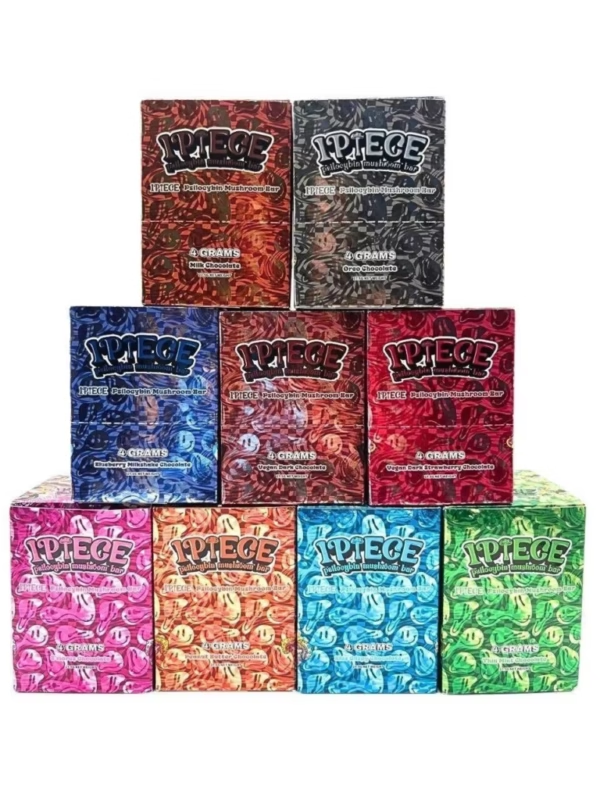
Psilocybin mushrooms art has become a distinctive subject within contemporary psychedelic culture, combining natural forms, surreal imagery, symbolism, altered states of consciousness, and centuries of mushroom-related cultural history. From ancient-looking rock imagery and ceremonial objects to modern digital illustrations, paintings, posters, and immersive installations, mushrooms have inspired artists to explore ideas surrounding nature, consciousness, transformation, and perception.
Today, mushroom-inspired artwork can be found across galleries, museums, digital art communities, fashion, illustration, and contemporary design. A growing interest in fungi has also encouraged artists to look beyond psychedelic culture and explore mushrooms as fascinating biological organisms in their own right.
What Is Psilocybin Mushroom Art?
Psilocybin mushroom art refers broadly to artwork inspired by psilocybin-containing mushrooms, their cultural associations, or the visual ideas commonly connected with psychedelic experiences.
The category can include:
- Psychedelic mushroom paintings
- Digital mushroom illustrations
- Surreal mushroom artwork
- Mushroom posters and prints
- Botanical mushroom illustrations
- Abstract psychedelic artwork
- Mushroom sculptures
- Psychedelic photography
- Contemporary fungi-inspired installations
- Mushroom-themed graphic design
Not every artwork featuring psychedelic mushrooms is specifically about psilocybin. Mushrooms have a much broader place in art and visual culture, making the subject particularly rich for artists.
The Historical Connection Between Mushrooms and Art
The relationship between fungi and visual culture is much older than modern psychedelic art. Researchers have documented prehistoric mushroom imagery and ancient objects that have been interpreted as potentially connected with psychoactive fungi, although some interpretations remain debated.
A 2025 review of the visual art of mycology notes that some of the earliest known mushroom-related imagery appears in prehistoric cave art in the Tassili n’Ajjer region of Algeria, dating back more than 7,000 years. The interpretation of these images remains an area of scholarly discussion.
Archaeological and historical evidence is particularly significant in Mesoamerica. Indigenous cultures in the region had documented relationships with Psilocybe species, and representations of mushroom-related beliefs and practices can be found in historical art, ceramics, stone objects, and manuscripts.
Psychedelic Mushrooms and Mesoamerican Culture
One of the most important aspects of researching psilocybin mushroom art is recognizing that psychedelic mushrooms have cultural histories that extend beyond modern Western psychedelic movements.
Historical scholarship documents the ceremonial significance of psychoactive mushrooms among some Indigenous communities in Mesoamerica. Archaeological objects known as mushroom stones have also attracted significant academic attention, although interpretations of their exact purposes vary.
This history is important because contemporary psychedelic mushroom artwork sometimes draws inspiration from Indigenous traditions without adequately acknowledging their cultural context. Artists and designers working with these themes can benefit from approaching the subject respectfully and avoiding unsupported claims about ancient traditions.
The Rise of Modern Psychedelic Art
Modern psychedelic art became particularly visible during the 1960s, when psychedelic culture influenced music, posters, fashion, graphic design, and experimental visual art.
Although psychedelic art is often associated with LSD, its visual vocabulary eventually became connected with a much broader range of psychedelic substances and experiences. Bright colors, flowing forms, distorted perspectives, repeating patterns, surreal landscapes, and imaginative organisms became common artistic motifs.
Mushrooms subsequently developed into one of the most recognizable symbols of contemporary psychedelic aesthetics.
The Royal Ontario Museum’s 2026 exhibition Psychedelics: Art. Culture. Science. demonstrates how psychedelic subjects continue to influence museums and contemporary cultural discussions. The exhibition brings together paintings, posters, textiles, botanical specimens, cultural objects, and scientific material to examine psychedelics from historical, cultural, and scientific perspectives.
Common Themes in Psilocybin Mushroom Artwork
1. Transformation
Mushrooms can symbolize transformation because of their unusual life cycle and their association with changing perceptions. Artists frequently depict mushrooms growing into enormous landscapes, transforming into animals, or merging with human figures.
2. Nature and Interconnection
Another popular theme is the relationship between humans and nature. Mushroom artwork may portray fungal networks, forests, roots, plants, animals, and people as interconnected systems.
3. Surrealism
Surreal imagery is particularly common in psychedelic mushroom art. Artists may exaggerate mushroom proportions, create impossible environments, or combine fungi with dreamlike landscapes.
4. Consciousness
Some artists use mushroom imagery as a metaphor for consciousness, perception, imagination, and the boundaries between internal and external realities.
5. Mystery
The hidden underground life of fungi provides another powerful artistic theme. Mycelial networks are largely invisible beneath the surface, making them a natural metaphor for hidden connections and unseen systems.
Mushroom Art in the Digital Age
Digital technology has significantly expanded the possibilities for psychedelic mushroom artwork. Artists can now create highly detailed illustrations, animations, 3D environments, generative artwork, and immersive installations.
Digital mushroom art often combines realistic botanical details with surreal environments. A single mushroom might become the center of an enormous fantasy landscape or be transformed into an abstract geometric structure.
Social media and online art platforms have also made mushroom-inspired visual styles more accessible to global audiences.
Scientific Inspiration Behind Mushroom Art
Artists are increasingly inspired by fungal biology rather than psychedelic symbolism alone.
Fungi have extraordinary biological characteristics, including complex growth patterns, reproductive structures, ecological relationships, and underground mycelial networks. This provides artists with an enormous visual vocabulary.
The scientific and artistic fascination with fungi is reflected in contemporary exhibitions and publications examining mushrooms as subjects of art, design, science, and culture. Google Arts & Culture’s presentation on fungi and art, for example, highlights how mushrooms have become subjects of scientific investigation as well as artistic and design experimentation.
Contemporary Mushroom Art
Modern mushroom artwork extends far beyond traditional paintings. Artists are experimenting with:
- Textile art
- Ceramics
- Sculpture
- Photography
- Digital illustration
- Animation
- Fashion
- Architecture
- Installation art
- Graphic design
- Generative art
Contemporary artists sometimes use fungi to explore environmental issues, mortality, regeneration, biotechnology, and the relationship between humans and ecosystems.
Research into fungal-inspired contemporary art has highlighted how mushrooms can symbolize concepts including decay, rebirth, transformation, and ecological cycles.
Why Is Psilocybin Mushroom Art Popular?
The popularity of psilocybin mushroom art can be attributed to several overlapping trends.
First, mushrooms have a visually distinctive appearance. Their caps, stems, textures, colors, and unusual growth patterns provide immediately recognizable artistic subjects.
Second, psychedelic culture has created a strong visual language around mushrooms. Mushroom imagery has become associated with imagination, alternative culture, surrealism, and exploration of consciousness.
Third, renewed scientific and cultural interest in psychedelics has brought the subject back into museums, academic discussions, and contemporary art. The Royal Ontario Museum’s 2026 exhibition is one recent example of institutions examining psychedelics through art, culture, history, and science rather than treating them solely as a counterculture subject.
Mushroom Art as a Symbol of Nature
One of the most interesting developments in contemporary mushroom artwork is the movement away from viewing fungi solely through a psychedelic lens.
Artists increasingly portray mushrooms as essential components of ecosystems. This approach focuses on decomposition, nutrient cycles, biodiversity, forests, and fungal networks.
As a result, mushroom art can communicate environmental messages without directly referencing psychoactive substances.
Creating a Psychedelic Mushroom Art Collection
For people interested in collecting mushroom-inspired artwork, there are several different styles to consider.
Botanical artwork focuses on realistic mushroom structures and scientific accuracy.
Surrealist artwork uses distorted proportions, dreamlike environments, and imaginative compositions.
Psychedelic artwork emphasizes patterns, visual movement, intense imagery, and altered-perception themes.
Contemporary fungi art may focus on ecology, biotechnology, sustainability, and the biological importance of fungi.
Choosing between these styles allows collectors to develop a mushroom art collection that reflects their personal interests.
The Future of Psilocybin Mushroom Art
The future of mushroom-inspired art is likely to become even more interdisciplinary. Advances in digital art, biotechnology, environmental design, and immersive media are giving artists new ways to explore fungi.
At the same time, museums and researchers are increasingly examining psychedelics through multiple perspectives. The current Royal Ontario Museum exhibition, for example, combines art, cultural history, natural history, and scientific research to create a broader understanding of psychedelics.
This broader perspective could lead to more sophisticated mushroom artwork—art that considers not only psychedelic imagery but also ecology, Indigenous cultural history, neuroscience, biology, and environmental change.
Final Thoughts
Psilocybin mushrooms art sits at the intersection of fungi, culture, history, science, and imagination. From ancient mushroom imagery and Mesoamerican cultural objects to modern psychedelic paintings and digital illustrations, mushrooms have provided artists with a powerful visual symbol for transformation, mystery, nature, and consciousness.
The most compelling contemporary mushroom art does more than reproduce colorful psychedelic imagery. It encourages viewers to think about the remarkable biology of fungi, their cultural significance, and humanity’s complex relationship with altered states of consciousness.
As interest in fungi and psychedelics continues to develop, psilocybin mushroom art is likely to remain an influential subject within contemporary visual culture.
SEO Keywords
psilocybin mushrooms art, psychedelic mushroom art, psilocybin mushroom artwork, psychedelic mushroom artwork, mushroom psychedelic art, magic mushroom art, psychedelic mushrooms artwork, mushroom paintings, psychedelic mushroom paintings, mushroom digital art, surreal mushroom art, psychedelic art, fungi art, mushroom illustration, psychedelic art prints, psilocybin art, mushroom artwork, contemporary mushroom art.
