
Uncategorized
lizard king mushroom
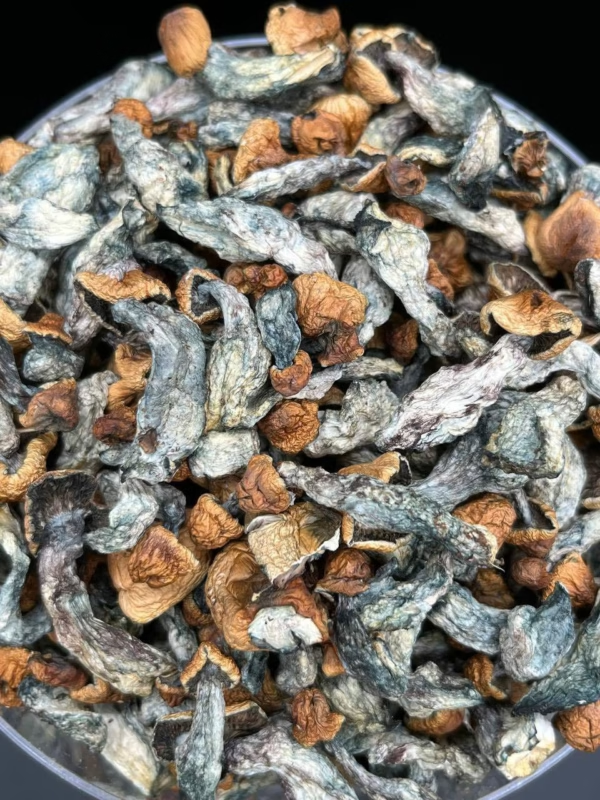
🌿 Lizard King Mushroom: History, Characteristics & Mycology Significance (SEO-Optimized Guide)
The Lizard King Mushroom, a well-known variety of Psilocybe cubensis, has earned a respected place in modern mycology thanks to its distinctive appearance, fascinating genetic traits, and rich origin story. Whether you’re a mycology enthusiast, a spore collector, or someone interested in the diversity of fungal species, the Lizard King strain continues to stand out as one of the most intriguing varieties available for microscopy and educational research. In this SEO-optimized guide, we’ll explore the background, morphology, and scientific value of this iconic mushroom—without discussing cultivation or consumption.
🐍 The Origin Story of Lizard King Mushroom
The Lizard King Mushroom reportedly takes its name from the mycologist and explorer known as “Lizard King,” who first introduced the strain to the broader community. Its reputation quickly spread due to its robust genetic profile, reliable spore production, and ability to maintain distinctive features across generations. Today, the Lizard King strain is widely referenced in mycology forums, academic discussions, and spore libraries, making it one of the most talked-about cubensis varieties among researchers.
🍄 Key Characteristics & Morphological Features
One of the reasons Lizard King Mushroom is so popular in research is its clear, recognizable morphology. Common traits observed in educational samples include:
- Medium to large fruiting bodies
- Thick, dense stems
- Golden to caramel-colored caps
- Strong veil formation
- Consistent spore coloration (typically deep purple-brown under microscopy)
These attributes make Lizard King ideal for microscopy, taxonomic study, and morphological comparison with other Psilocybe cubensis strains.
🔬 Why Mycologists Study Lizard King Mushrooms
Researchers and hobbyists value the Lizard King strain for many reasons:
1. Reliable Spore Production
This strain produces dense spore deposits, making it useful for slide preparation and spore structure analysis.
2. Distinct Genetic Traits
Its stable genetics allow mycologists to compare it with other cubensis strains and examine variations in cap shape, coloration, and spore distribution.
3. Educational Importance
Because its features are easy to observe, Lizard King Mushrooms are frequently used in mycology education, fungal identification courses, and biodiversity studies.
4. Popularity in Spore Collections
Collectors often include this strain due to its reputation and distinctive characteristics, which help expand taxonomic reference sets.
📚 Legal & Ethical Considerations
It’s important to note that while psilocybin-containing mushrooms are controlled substances in many regions, spores—which do not contain psilocybin—are often legal for microscopy and research purposes, depending on local laws. Always verify the regulations in your area before acquiring or handling any mushroom specimens or spore materials.
🌱 Lizard King Mushroom in Modern Mycology
Today, the Lizard King Mushroom remains one of the most notable cubensis varieties for academic and hobbyist study. Its striking appearance, dependable traits, and historical significance make it a staple in:
- Spore reference collections
- Educational materials
- Taxonomy databases
- Comparative morphology studies
As interest in mycology continues to grow, the Lizard King strain stands out as an excellent example of the unique diversity found within the fungal world.
🧪 Final Thoughts
The Lizard King Mushroom is more than just a well-known strain—it’s a valuable educational specimen that offers insight into fungal genetics, morphology, and biodiversity. Whether you’re a researcher, student, or mycology hobbyist, exploring the characteristics of this iconic variety can deepen your understanding of the Psilocybe cubensis family and the broader fungal kingdom.
If you’d like, I can also write:
✅ A meta description for this blog post
✅ Additional blog posts on related strains
✅ A category page description for a mycology or spore website
Just let me know!
